


Dirqotix
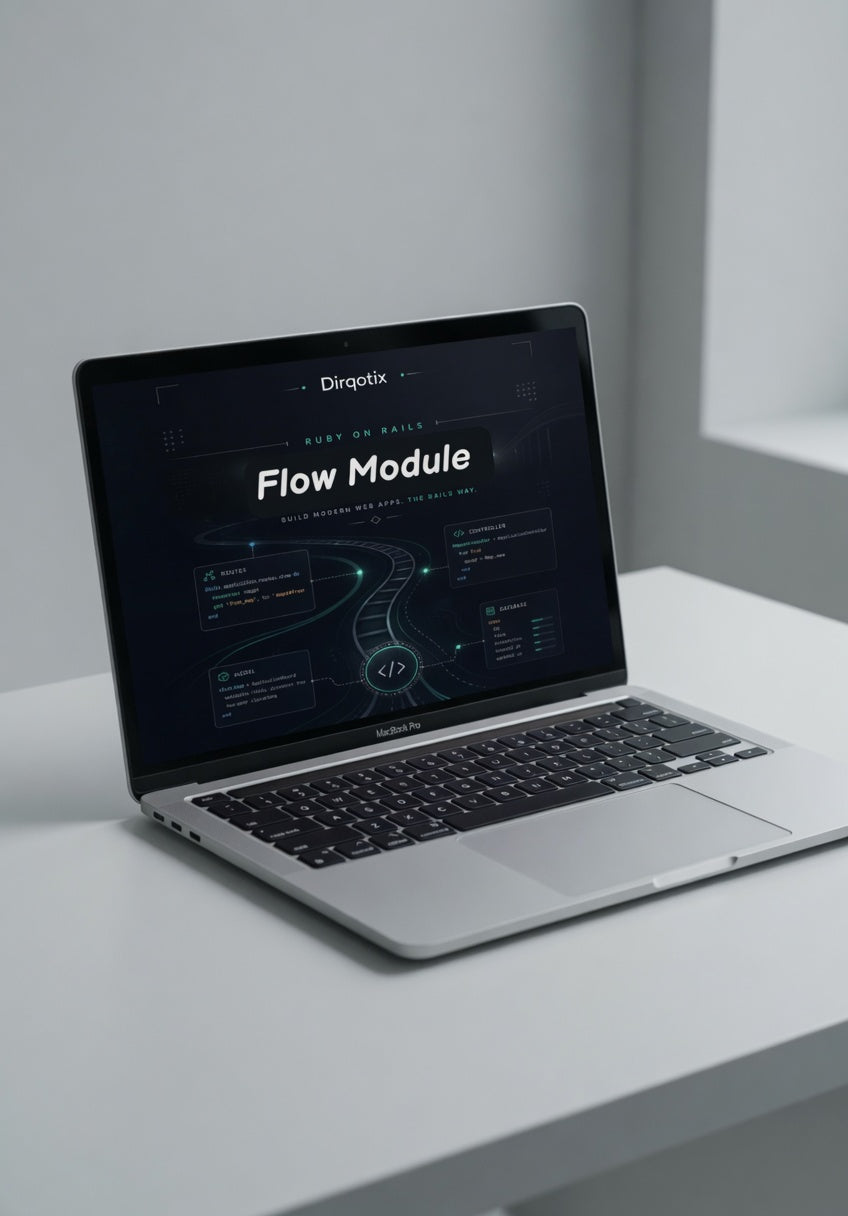
Flow Module
Flow Module
Couldn't load pickup availability
- 🧾 Digital file available after purchase
- 📚 Long-term availability
- 🔐 Secure checkout
- ✨ Content updated in 2026
Self-paced learning overview
1. Problem Statement
After learning the structure of Rails, a more detailed task often appears: understanding not only the names of the parts, but also the movement of data between them. A learner may already know what a route, controller, model, and template are, yet still feel lost when working through examples. It can be especially unclear where a record is created, where it is read, how it reaches a page, and why one code change affects another part of the application. Without a connected explanation, a learning project may feel like a set of separate files rather than one organized system. Flow Module is created to show this movement calmly, step by step, and through practical learning situations.
2. Solution
Flow Module explains Ruby on Rails through the idea of flow: from request to response, from form to record, from data to page. The materials help learners see how one action leads to the next and why Rails is organized in this way. Learners review small scenarios where a route sends a request to a controller, the controller works with a model, and the page shows the prepared result. A separate part explains how to read errors that appear while working with data and how to calmly find the place where the connection was interrupted. This approach helps learners move beyond repeating examples and better understand what happens inside a Rails application.
3. What’s Inside
Flow Module includes a set of learning materials focused on data movement in Ruby on Rails. This tier continues the logic of the previous level, but moves from structure review into work with real learning actions.
The first block explains what “flow” means in a Rails application. Learners review the path from address to page and see how different code parts take part in the process. The goal is not only to remember file names, but to understand the order: request, route, controller action, data work, response.
The second block focuses on routes in a practical context. The materials show how routes connect with actions, why action names matter, and how to read a route as part of a larger sequence rather than a separate line. Learners see examples for viewing a page, creating a record, and moving between learning parts of an application.
The third block covers controller actions. It explains how a controller receives parameters, selects the needed action, and prepares data for the next step. The materials also show why it is helpful to keep only request-related logic inside the controller. This supports a cleaner style of working with Rails from an early stage.
The fourth block introduces parameters. Learners see how data from a form or address enters the controller, how it can be read, and how it affects the next action. The topic is explained without excessive detail, but with enough depth to prepare for working with forms in later tiers.
The fifth block focuses on creating and reading simple records. Learners review basic examples where data is saved, then found and shown on a page. The important point here is the connection between model, controller, and template. The materials show how one part of the code prepares data while another part handles display.
The sixth block covers pages and templates within the movement of data. Learners see how variables from the controller can be used in a template, how a page receives content, and why display should stay separate from processing. This helps learners read examples more clearly and understand where changes belong.
The seventh block includes exercises for tracing sequences. Learners work with small learning situations: find the route, move to the controller action, identify the model, and review which data is passed to the page. These exercises build attention to structure and help learners see a Rails application as a connected system.
There is also a section about common early-stage errors. It reviews situations where a route does not lead to the expected action, a variable does not appear on a page, parameters are read incorrectly, or a record is not displayed where expected. The explanations focus not on fear of mistakes, but on calm analysis: where the path began, where it stopped, and which part should be reviewed.
4. Who is this for?
Flow Module is for learners who have completed an initial Rails introduction and want to move toward a more practical understanding. It is a good fit for those who have already seen routes, controllers, and models, but want to understand how they work together in a learning application.
This tier also suits learners who often get lost between files while completing exercises. When one changed line affects the page result and the reason is unclear, Flow Module helps trace that connection more carefully.
This tier is appropriate for learners preparing to work with forms, records, and basic actions for creating and viewing data. It avoids heavy topics, while giving enough foundation for the next learning steps.
5. What You’ll Learn
- How a request moves inside a Rails application.
- How a route connects with a controller action.
- How a controller receives parameters and prepares a response.
- How data moves from a form or address into the controller.
- How a model takes part in working with simple records.
- How a page receives data from a controller.
- How to trace the sequence: route → action → data → page.
- How to read small Rails examples with less confusion.
- How to find where the connection between code parts was interrupted.
- How to work with basic learning scenarios for creating and viewing records.
- How to separate request processing from page display.
- How to prepare for forms and validations in later tiers.
6. 30-Day Refund Window
For Flow Module, a 30-day refund window can be included after the order is placed. If the materials do not match the learner’s expectations, they may contact the dirqotix team within that period. The request is reviewed according to the store policy and the terms shown during checkout. This section should stay calm, transparent, and free from exaggerated claims.
Are these courses suitable for beginners?
Are these courses suitable for beginners?
Yes, the materials are structured so learners can gradually explore Ruby on Rails, core terms, code structure, and the logic behind building web applications. Some tiers focus more on the starting point, while others move into deeper practice.
Can I study at my own pace?
Can I study at my own pace?
Yes, the materials are divided into clear content blocks. This makes it convenient to return to separate topics, repeat examples, and continue to the next parts when ready.
Share


- Choosing a selection results in a full page refresh.
- Opens in a new window.